
Panch Tatva in Vastu Shastra: Meaning, Balance, Experience and Remedies
Panch Tatva in Vastu is one of the most important foundations of Vastu Shastra. It explains how Earth, Water, Fire, Air, and Space shape home balance, health, prosperity, emotional stability, and the way a house actually feels to live in.
30-day protocol PDF - free download
Enter your email and get the guided template instantly.

Panch Tatva is one of the most fundamental principles of Vastu Shastra and ancient Indian philosophy. The term refers to the five basic elements that form the foundation of life and the universe: Earth, Water, Fire, Air, and Space. In Vastu, every house, building, and environment reflects the interaction of these five elements. When they stay balanced, a home supports clarity, health, prosperity, and emotional steadiness. When they are disturbed, the same house can begin to produce stress, arguments, low confidence, and financial instability.
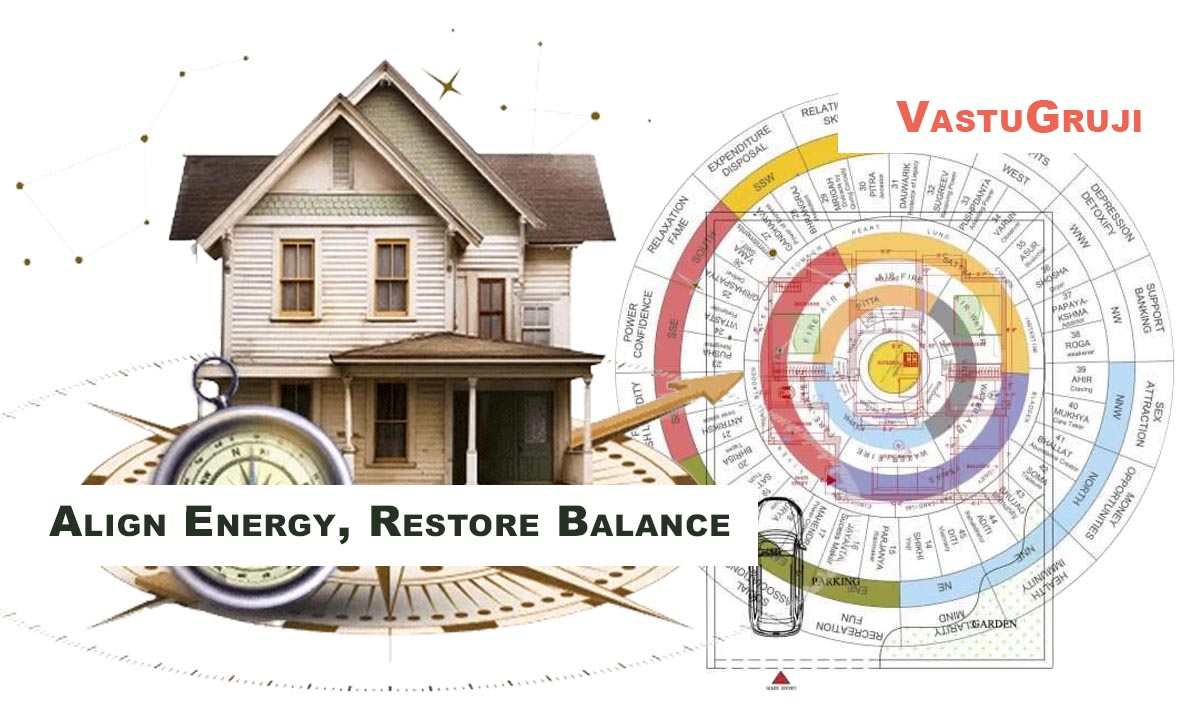
That is why Panch Tatva in Vastu is not only a philosophical topic. It is a practical framework for analyzing living spaces. It helps explain why one house feels grounded, another feels restless, and another seems beautiful but still uncomfortable. It also connects naturally with the 45 Devta and Vastu Purusha Mandala layer, because directional devtas give named structure to elemental energy. For that wider map, see the 45 Devta Mandala Map.
What Is Panch Tatva in Vastu?
Panch Tatva means the five elemental forces that shape life and space. In Vastu, these elements are not read as abstract symbols alone. They are used as a system to understand stability, flow, heat, circulation, and openness inside a house. This is why the keyword panch tatva in vastu matters so much: it is one of the clearest bridges between philosophy and practical home correction.
The five elements are:
- Earth (Prithvi): stability, grounding, structure, patience, and long-term security
- Water (Jal): flow, opportunity, emotions, receptivity, and prosperity movement
- Fire (Agni): energy, transformation, action, motivation, and intensity
- Air (Vayu): movement, communication, adaptability, and relationship flow
- Space (Akash): openness, consciousness, integration, and the field that connects the rest
When these elements are balanced, a home becomes more supportive. When one element dominates or becomes suppressed, the imbalance starts showing up in behavior, decisions, sleep, relationships, or work rhythm.
Understanding the Five Elements of Panch Tatva
1. Earth Element (Prithvi Tatva)
The Earth element represents stability, grounding, strength, patience, and long-term security. In Vastu planning, it is commonly associated with the South-West zone and the stabilizing logic that gives a family emotional and financial support. A balanced Earth element often brings stronger discipline, clearer long-term decisions, and a more secure family foundation.
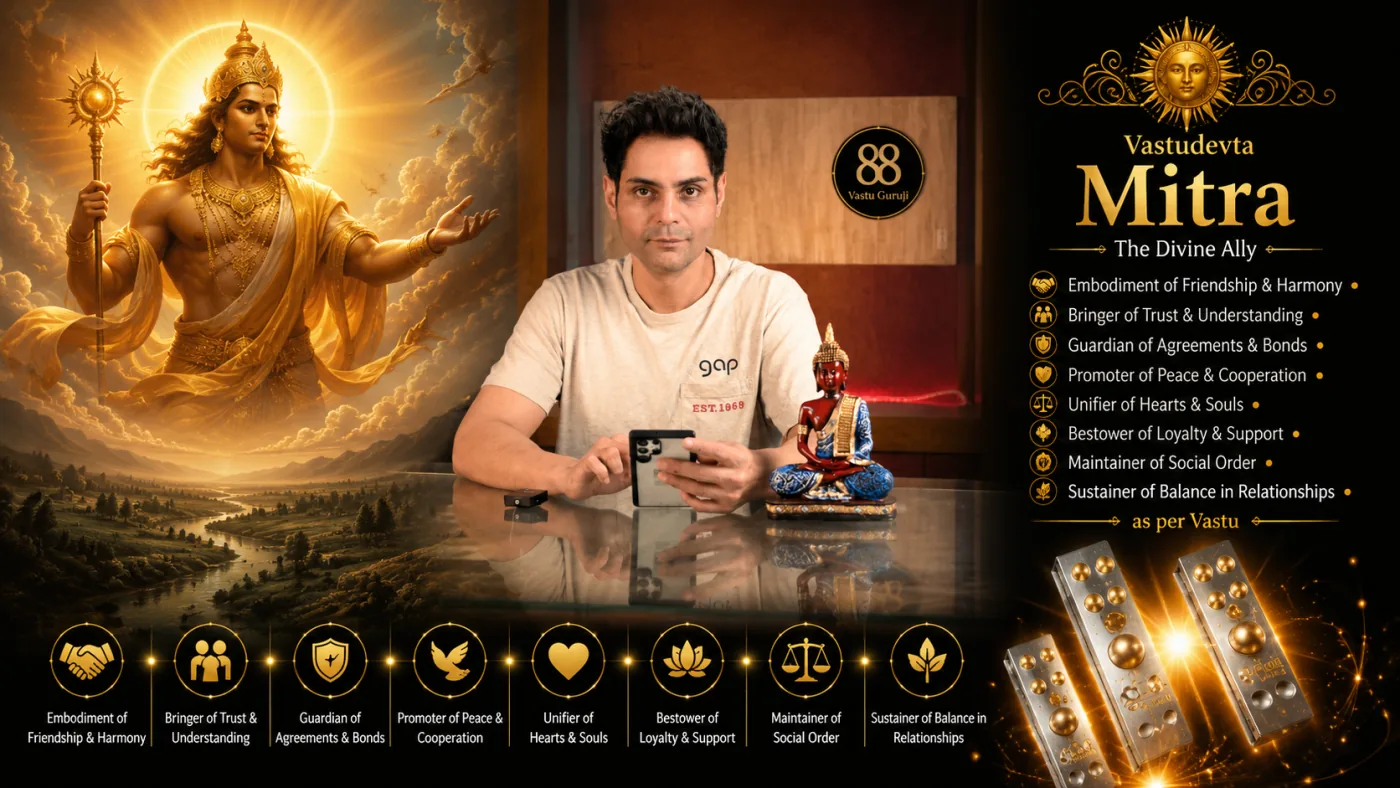
If Earth becomes weak, people may feel ungrounded, indecisive, or financially unstable. Long-term goals become difficult to maintain. The practical reading of Earth becomes stronger when you compare it with stabilizing pages like Vivaswan Devta for authority strength and Mitra Devta for settled balance.
2. Water Element (Jal Tatva)
The Water element represents flow, opportunity, prosperity, clarity, and emotional softness. In Vastu, it is commonly linked with the North-East. When Water is balanced, the house feels lighter in thought, more spiritually open, and more receptive to opportunities. When it is blocked, confusion, stress, and emotional heaviness often begin to rise.
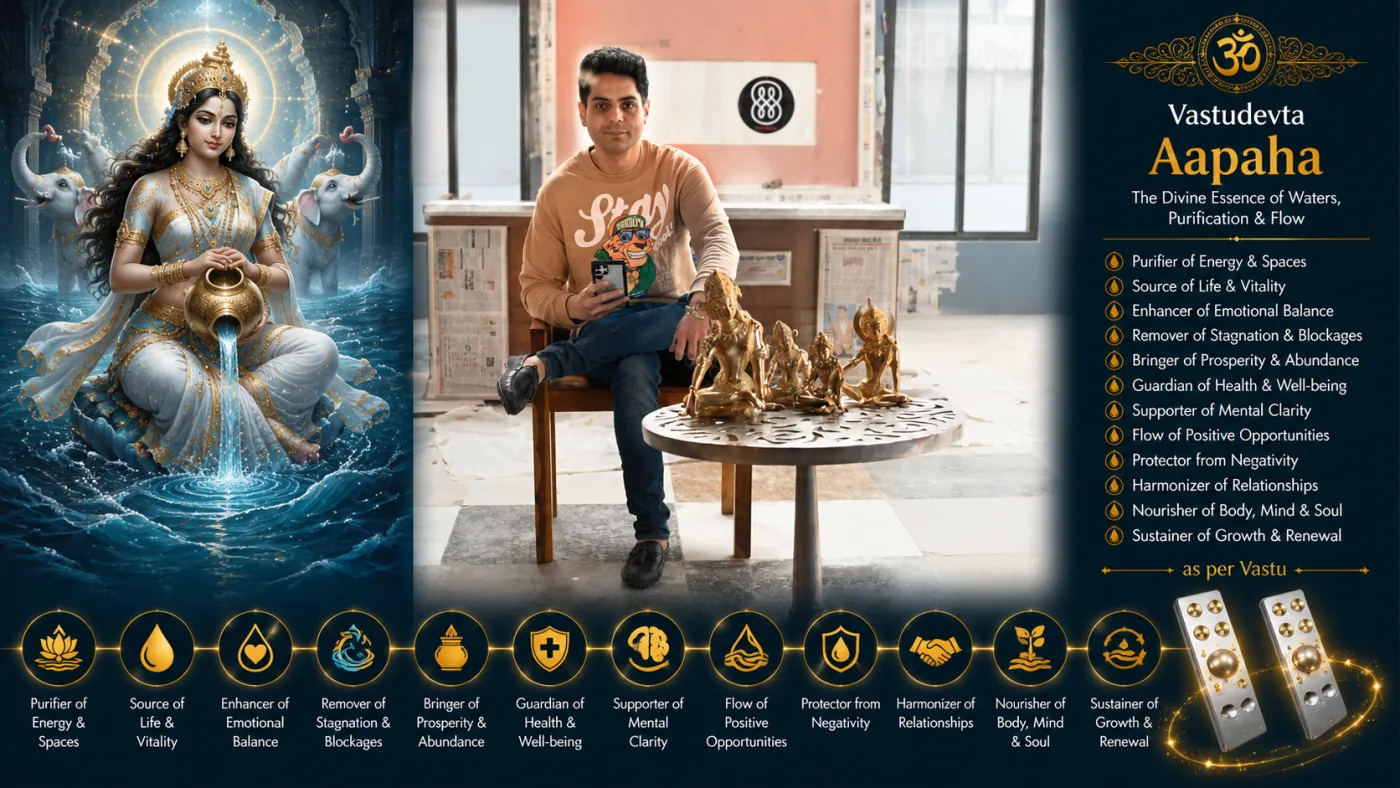
This is where directional reading and the mandala layer meet. The receptive and flow-based side of Vastu becomes easier to understand when you also read Pritthidhar / Bhudhar, which helps explain how the house receives support, planning flow, and grounded expansion.
3. Fire Element (Agni Tatva)
The Fire element represents energy, transformation, digestion, action, ambition, and motivation. In Vastu Shastra, it is generally associated with the South-East. A balanced Fire element supports confidence, leadership, digestion, and the ability to execute plans. When Fire becomes excessive or badly placed, common effects include anger, impulsive decision-making, stress, and frequent friction.
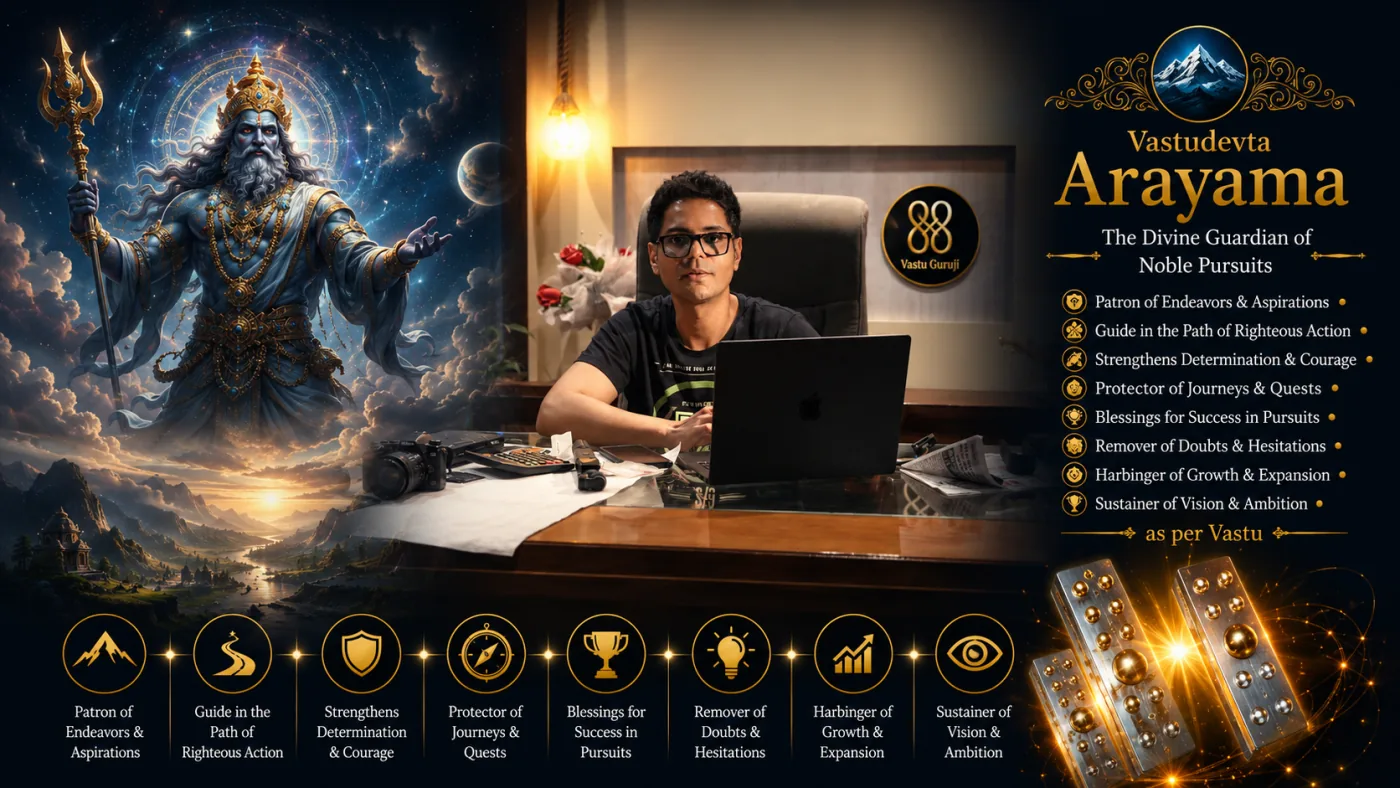
Fire also needs directional discipline. If action rises without clarity, the house can feel pressurized instead of empowered. The solar initiation side of elemental movement becomes clearer when you read Arjama Devta, especially in relation to active beginnings and clean movement.
4. Air Element (Vayu Tatva)
The Air element represents movement, circulation, communication, and relationships. It is commonly connected with the North-West. When Air is balanced, people communicate better, relationships flow more smoothly, and the house feels breathable and adaptable. When Air is disturbed, misunderstandings, instability, emotional fluctuation, and social tension can become more visible.
Air imbalance is often not about one dramatic defect. It shows up as scattered energy, poor follow-through, or too much mental movement. For the relationship-balance and settling layer of this logic, read Mitra Devta.
5. Space Element (Akash Tatva)
The Space element represents openness, consciousness, clarity, and the field that allows all other elements to interact. In Vastu, the central zone of the house, known as Brahmasthan, reflects this element most strongly. When Space is balanced, the house feels calm, integrated, and mentally breathable. When it becomes blocked by clutter, heavy structures, or awkward circulation, people often feel mental stress, emotional heaviness, and lack of clarity.
This is why the center is so important in Vastu. To understand the Space element properly, the best internal pages are Brahma Devta and Brahmasthan in Vastu Shastra.
A Personal Story: Discovering the Balance of Panch Tatva
Several years ago, a family approached me with a common but serious problem. They had recently moved into a new house and were experiencing unexpected difficulties. The father was struggling with business decisions, the mother felt emotionally stressed, and their children were finding it hard to focus on studies. On the surface, the house looked modern, polished, and well-finished. But something felt uncomfortable in the way the space behaved.
When the layout was examined through Panch Tatva and the Vastu Purusha Mandala, the imbalance became clear. The North-East, representing Water and clarity, was blocked by heavy storage furniture. The South-West lacked proper weight, weakening the Earth element that should have provided stability. At the same time, the kitchen was functioning in an unsuitable zone, disturbing Fire. The center of the house was visually crowded, reducing Space.
Instead of recommending major demolition, the corrections stayed practical. Heavy objects were removed from the North-East. The South-West was grounded with more stable furniture. Fire-related activities were repositioned more carefully. The center was cleared so that the Space element could breathe again. Within a few months, the family began reporting a visible shift. The father felt clearer in business decisions, the mother felt emotionally calmer, and the children settled into study more easily. Most importantly, the house no longer felt stressful. It felt supportive.
This experience reinforced one powerful lesson: Panch Tatva influences not only the design of a house, but the quality of human experience inside it.
Practical Remedies to Balance Panch Tatva in a Home
Structural design matters, but small corrections can still improve elemental balance when major changes are not possible. Some of the most practical steps include:
- keep the North-East clean and open so Water-related clarity can flow
- strengthen the South-West with calm weight and stable use to support Earth
- place cooking or controlled heat activity thoughtfully so Fire stays disciplined
- maintain ventilation and movement where Air should support communication and adaptability
- keep the center of the house uncluttered so Space remains open
Where structural changes are limited, some homes also use mapped Vastu tools and non-demolition support methods. But random remedies should not come first. The more reliable route is to understand the interaction of Panch Tatva, then read Vastu Remedies or take a review if the imbalance is complex.
How Panch Tatva Connects With the 45 Devta Pages
This page ranks best when it is not isolated. Panch Tatva becomes much stronger when connected to the 45 Devta and mandala structure. The center and Space element are clarified through Brahma. Directional initiation and solar movement can be explored through Arjama. Authority and disciplined execution connect well with Vivaswan. Relationship settlement and balance become clearer through Mitra. Flow, receptivity, and grounded opportunity are strengthened by Pritthidhar / Bhudhar.
That is why Panch Tatva in Vastu should be treated as a hub-supporting article, not a dead-end explanation page. It should move the reader deeper into the authority cluster.
Why Panch Tatva Matters in Modern Life
Modern homes often prioritize only design aesthetics. Vastu reminds us that a house is not only a structure; it is also an energy environment. The five elements influence how we think, rest, communicate, work, and respond emotionally inside a space. When Panch Tatva stays balanced, homes feel calmer, decisions become clearer, relationships become smoother, and opportunities appear more naturally. When it is ignored, subtle difficulties can persist for years without obvious explanation.
Final Professional Checklist
Tick each point while reviewing a Vastu plan or guidance page so core validation is not skipped.
Conclusion
Panch Tatva in Vastu offers one of the most powerful ways to understand the relationship between human life and the built environment. Earth gives stability, Water supports flow, Fire brings transformation, Air enables movement, and Space connects everything together. When these five elements work in harmony, a home becomes more than a place to live. It becomes a source of clarity, balance, and growth.
If you want to go deeper, the best next pages are Vastu Shastra, Vastu Directions, 45 Devta Mandala Map, and the linked devta pages above. That is the sequence that turns Panch Tatva from philosophy into practical Vastu understanding.


Comments & Ratings
Login to leave a comment or rating.