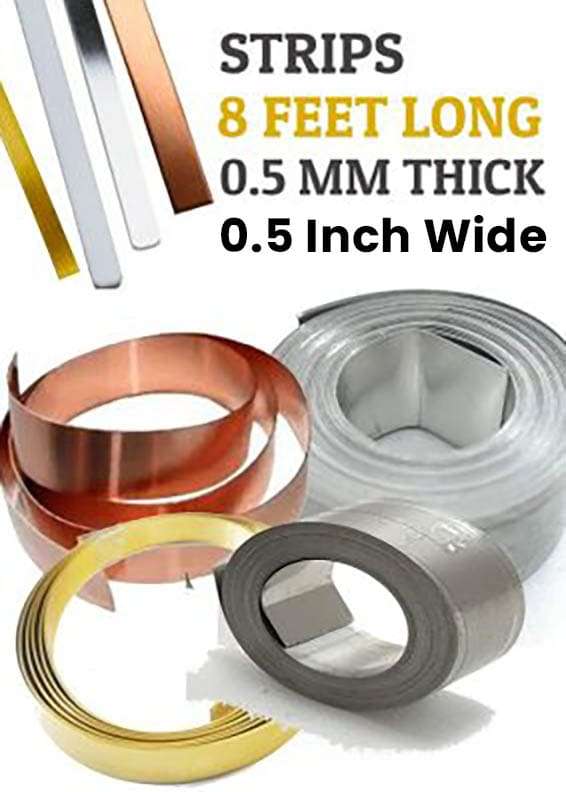
4ft vs 8ft Metal Strip Selection Guide | Vastu Correction
Many people choose strip length by availability or guesswork. Later, continuity breaks, joints increase, and the route needs re-alignment. This small decision can create avoidable rework and extra cost. Choose by mapped span logic, not by stock or estimate.
30-day protocol PDF - free download
Enter your email and get the guided template instantly.
Why Length Matters More Than It Looks
A metal strip is not just a piece of metal. It carries route continuity in correction logic. If continuity breaks, stability often slows down. If a long strip is forced in a constrained path, alignment can drift.
Why This Confusion Happens
- Both products look similar in format.
- Price gap is often small, so choice feels casual.
- Layout objective is skipped before purchase.
- Oversimplified rules are followed without mapped validation.
When 4ft Is the Smarter Choice
- Short controlled segments
- Localized boundary routes
- Tight corridors or constrained areas
- Mapped routes intentionally divided into sections
In smaller spans, 4ft usually offers better control and easier handling precision.
When 8ft Is the Better Choice
- Long straight continuity routes
- Boundary paths where fewer joints are preferred
- Large wall-span correction lines
- Commercial routes requiring uninterrupted flow
For longer spans, 8ft often gives smoother continuity with fewer joint-risk points.
Door or Toilet Area: Do Not Use Fixed Rules
You may hear rules like "4ft for door" and "8ft for toilet." These are oversimplified and can mislead installation.
Correct approach:
- Measure the actual mapped route span.
- Check correction objective and boundary logic.
- Choose length that supports uninterrupted mapped coverage.
A door route may need 8ft in some cases; a utility boundary may be solved by 4ft in others.
Real Scenario (Practical Decision)
Consider an office corridor with a 7ft active span. Option A uses 2 x 4ft strips with one joint. Option B uses 1 x 8ft strip trimmed for fit. The mapped logic decides whether a single controlled joint is acceptable or uninterrupted continuity is better for that route.
Quick Decision Guide
- If span is below 4ft: 4ft is usually enough.
- If span is 4-8ft: compare one 8ft vs two 4ft by joint impact.
- If span is above 8ft: use mapped combination planning.
Joint Impact (Expert View)
- Each joint adds one more alignment check point.
- More joints increase installation precision requirement.
- Poorly aligned joints can disturb long-term continuity sensitivity.
- Forced long-strip handling in tight routes can also create drift.
The right answer is not always longer or shorter. The right answer is mapped continuity with practical alignment control.
Common Mistakes That Delay Results
- Using 4ft on long routes and creating too many joints
- Forcing 8ft in tight paths and causing alignment drift
- Mixing lengths without mapped route logic
- Choosing by discount/stock instead of correction objective
- Installing without route validation
Professional Reminder
Do not decide strip length by location name. Every layout is different. Every correction route is different. Correct length is the one that covers mapped span without disturbing continuity.
When Not to Decide Length Alone
- Multi-zone overlap in same property
- Mixed residential + commercial use
- Repeated correction history with partial outcomes
- Unclear route objective or unclear joint tolerance
In these cases, take span validation consultation before final purchase.
FAQ
- Can 8ft strip be cut to fit? Yes, if mapped logic allows and alignment handling remains controlled.
- Are two 4ft strips always equal to one 8ft strip? Not always. Joint impact can change continuity behavior.
- Are joints always wrong? No. Controlled joints can be acceptable in segmented mapped routes.
- Does length selection depend on zone? Zone objective and route span both matter together.
If you are researching metal strip 4ft vs 8ft use, vastu correction strip length, or 4ft vs 8ft metal strip difference, always prioritize mapped span logic over thumb rules.
Emotional Closure
Choosing strip length is not just a measurement choice. It is a stability decision. A correct choice today supports long-term alignment and protects you from avoidable rework later.
Related Reading
- Rod vs Strip Guide
- Non-Demolition Sequence
- Zone-Wise Metal Rod Selection Guide
- Zone Validation Consultation
- Metal Strips Category
Final Professional Checklist
Tick each point while reviewing a Vastu plan or guidance page so core validation is not skipped.
Common mistakes to avoid
- Applying remedies before confirming entry, zone, and room logic.
- Mixing informational guidance with heavy sales intent.
- Using fear-heavy language instead of measurable guidance.





Comments & Ratings